Anthropic Workflows And Axon: Fix The Path Before Expanding Agent Autonomy
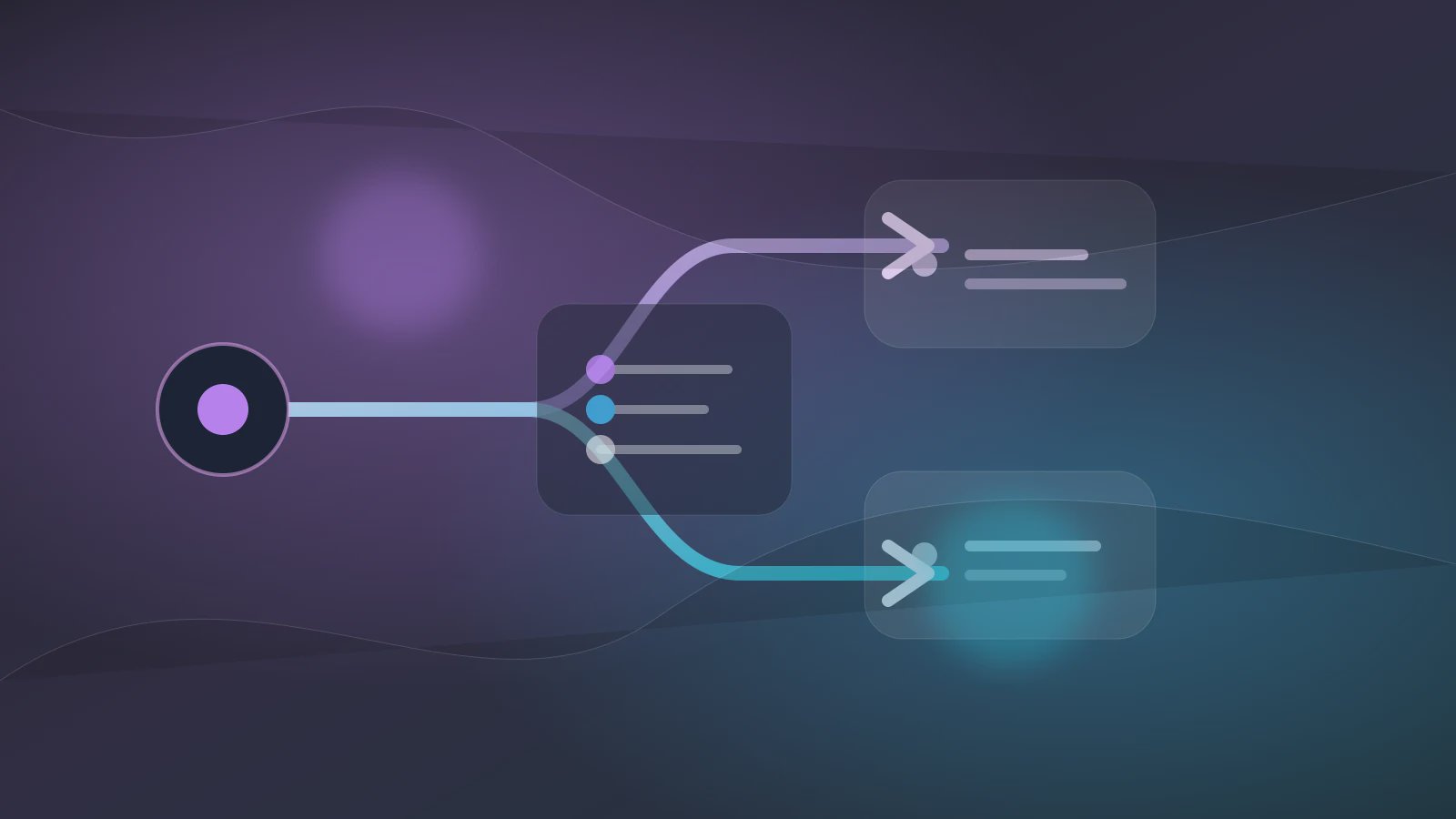
Anthropic workflows matter to enterprise teams because they pull the Agent conversation back into engineering reality. Which path should be fixed? Which judgment should be delegated to a model? Which action must stop for human confirmation? Over the past year, many teams have labeled almost every AI execution pattern as an Agent. The result is familiar: repetitive tasks remain time-consuming, manual repair still happens after failed runs, and multi-step work becomes error-prone when permissions and outputs are vague. The issue is not that the Agent is not smart enough. The issue is that the process has not been designed as a runnable, evaluable, recoverable system.
In Building Effective Agents, Anthropic distinguishes workflows from agents. Workflows orchestrate systems through predefined code paths and tools; agents let the model dynamically direct the process and tool use. That distinction matches Axon's product direction: enterprise office tasks should first become stable workflows, then expand autonomy once the boundary is understood. In Axon terms, that path is System Skills -> User Skills -> Agents -> Trust Mode -> Schedule.
A good enterprise Agent does not do whatever it wants. It knows which steps must follow the workflow, which judgments can be intelligent, and which actions must pause for confirmation.
What The Distinction Means For Office Work
Anthropic workflows are useful because they prevent teams from flattening every agentic system into one architecture. Office automation contains several task shapes.
| Task shape | Better starting point | Why | Axon landing zone |
|---|---|---|---|
| Fixed material preparation | Workflow | Inputs, steps, and outputs are stable | Source Data + Skill chain |
| Semi-structured research | Workflow plus local model judgment | The path is stable, but synthesis needs an LLM | Research Skill + PDF / Markdown |
| Open-ended exploration | Agent | The goal is clear, but the route is not fully known | Manual run first, then Skill extraction |
The point is not to make Agents smaller. It is to choose the right architecture for the task. If a job happens every week, uses the same sources, and produces the same artifact type, it should become a workflow before the model is asked to re-plan it every time.
Fixed Path Is Not Conservatism
A fixed path gives input, tools, artifacts, and risk a place to live. It makes evaluation, review, and change control possible. Anthropic's Demystifying evals for AI agents explains that agent evaluation becomes harder as systems call tools, update state, and span multiple turns. A stable workflow reduces that evaluation problem before the team expands autonomy.
Autonomy Should Grow Inside Boundaries
Once the workflow is stable, the team can enlarge model judgment locally. Let the model choose emphasis in a summary, rewrite tone, judge evidence strength, or recommend a next action. But sending, deleting, overwriting, or calling external systems should remain behind Trust Mode until the organization explicitly changes the boundary.
How Axon Turns The Idea Into Product Objects
Axon does not treat workflow as a slideware abstraction. It maps workflow design to executable objects:
- System Skills: platform-maintained capabilities for files, Office, internet, media, and workspace actions.
- User Skills: business rules, templates, and artifact formats packaged by the team.
- Agent steps: the ordered chain that calls Skills.
- Trust Mode: the boundary between low-risk automation and confirmed actions.
- workspace: the place where outputs, evidence, and run records can be inspected.
If you need the control layer, read the AI Agent control plane. If the team still treats Skills and Agents as interchangeable, read System Skills vs General Agents.
Decide Workflow First, Autonomy Later
The following decision card is useful in design reviews. Use it in this order, because the order forces the team to prove the path before expanding the Agent:
- Classify the task shape before choosing architecture.
- Record the owner who accepts the artifact and the owner who can stop the run.
- Write the first rejected automation case, not only the happy path.
agentDesignDecision:
  chooseWorkflowWhen:
    - "same input fields appear every run"
    - "same tools are called in similar order"
    - "output artifact has an acceptance standard"
    - "risk can be mapped to Auto / Confirm / Auth"
  allowMoreAutonomyWhen:
    - "the path cannot be fully known before reading sources"
    - "model judgment improves routing or synthesis"
    - "workspace evidence remains inspectable"
    - "human owner can stop or revise the run"
  rejectAutomationWhen:
    - "no owner accepts the output"
    - "external impact is unclear"
    - "failure cannot be recovered"
The message is straightforward: fix the path before expanding autonomy. Anthropic workflows remind teams that an Agent's value is not escaping process. It is making intelligent judgment useful inside process.
Connect The Design To Operations
If the task is already scheduled, continue with the Agent run journal. Run records show whether the workflow is actually stable. If the task involves external impact or sensitive actions, read human approval boundaries. Do not give high-risk actions to automation merely because the model's explanation sounds reasonable.
Three Red Lines For Adoption
Q1: Does model explanation prove system delivery?
No. Do not treat "the model can explain the task" as proof that the system can deliver the task. Explanation is only the start. Enterprise teams need fielded inputs, acceptable artifacts, and failures that can be located.
Q2: When should human confirmation enter the design?
Before launch. Do not add human confirmation as an afterthought. If an action affects an external object, such as email, publishing, file overwrites, or third-party systems, the confirmation boundary belongs inside the Agent design before launch.
Q3: Can evaluation wait until after release?
It should not. One engineering benefit of Anthropic workflows is that fixed paths make evaluation concrete: the same input should call the same Skills, outputs should satisfy the schema, and Trust Mode should stop the right action.
Fix One Operable Path First
If your team is chasing Agent autonomy, pause and ask whether the task has fixed inputs, fixed tools, fixed artifacts, and fixed risk boundaries. If it does, build the workflow first in Axon, then expand autonomy after stable runs. Download Axon to test a Research -> PDF -> Email chain, then read more about the control plane, run journal, and approval boundary so the Anthropic workflows lesson becomes office automation that can actually be operated.