AI Financial Statement Analysis Workflow: Build a Reviewable Fundamentals Report with Axon Agent
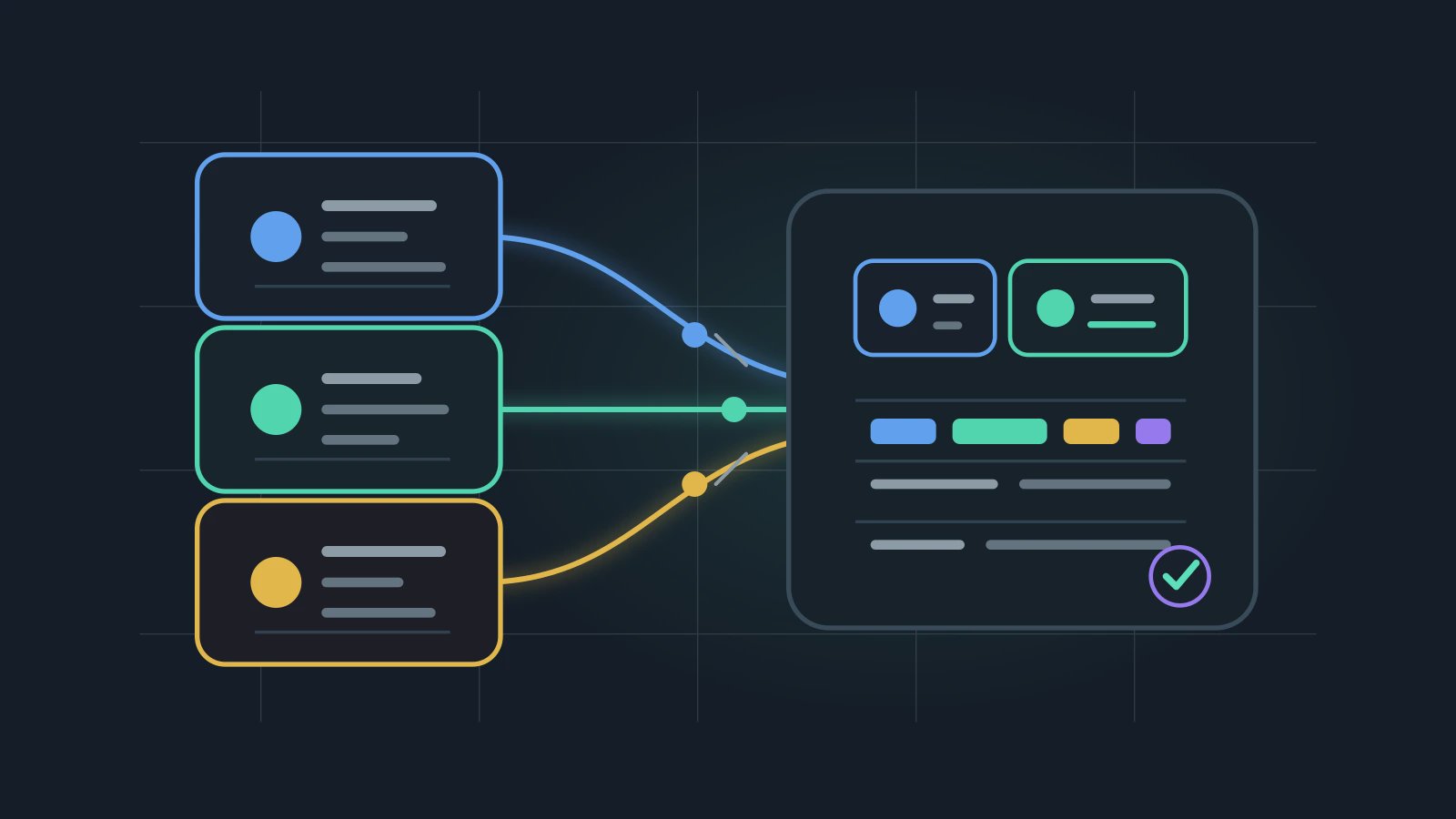
An AI financial statement analysis workflow turns formal filings, statement notes, and management discussion into a research process with traceable sources, explicit calculation rules, and open review items. Its purpose is not to let software produce a polished but unsupported verdict. It reduces repetitive, manual, time-consuming, and error-prone work across PDFs, period comparisons, and accounting notes while preserving a route from every material observation back to the original disclosure.
Axon Agent turns that boundary into an inspectable workflow: source files enter the workspace, named System Skills handle extraction and report delivery, and Trust Mode keeps external distribution behind human confirmation.
Net Income Alone Does Not Explain the Business
The SEC Beginners' Guide to Financial Statements explains the distinct roles of the balance sheet, income statement, cash flow statement, and statement of shareholders' equity. The income statement describes revenue, expenses, and earnings over a period. The cash flow statement describes actual cash movement over a period. The balance sheet describes assets, liabilities, and equity at a point in time. One cannot substitute for the others.
Consider a company where revenue and earnings rise while operating cash flow falls and both receivables and inventory expand. That combination does not automatically prove deterioration. It does justify a narrower set of questions: Did revenue recognition or customer payment timing change? Is inventory supporting a launch, or is it moving more slowly? Did an acquisition, restructuring item, or accounting-policy change affect comparability?
A useful fundamentals review therefore needs three connected views:
- Operating performance: how revenue, gross profit, expenses, and operating profit changed, including segment contribution.
- Funding structure: whether cash, debt, receivables, inventory, and working capital support the current operating pace.
- Cash validation: whether accounting earnings became operating cash and what remained after capital expenditure.
Strong analysis does not collect more metrics. It tests whether profit, financial position, and cash flow tell a coherent operating story.
How Axon Agent Produces a Research Evidence Pack
The workflow follows the current desktop path of Assistant -> Run -> Build. A normal user does not need to create a custom Skill first.
Step 1: Assistant defines the evidence boundary
Start by stating the company entity, reporting period, comparison period, currency, unit, and questions the report must answer. Inputs should favor regulatory filings, issuer investor-relations materials, or formal annual and quarterly reports already obtained by the user. For US public-company research, use the SEC EDGAR filing search to verify the disclosure. The SEC Inline XBRL overview explains how structured tags connect reported facts with definitions, reporting periods, and other context.
A useful task description looks like this:
Goal: compare the fundamental performance of Example Company across its two latest complete reporting periods.
Inputs: formal filing PDFs, statement notes, and management discussion.
Focus: revenue and margins, operating cash flow, capital expenditure, receivables and inventory, cash and debt.
Output: a Markdown research report and PDF. Label every number with period, unit, source page, and formula.
Boundary: do not make security-selection or trading decisions. Put inconsistent periods, missing sources, and non-reproducible calculations into open review items.
Step 2: Run with one job for each System Skill
The first version needs only three steps:
{
  "level": "user",
  "category": "finance",
  "role": "Financial Statement Fundamentals Research",
  "description": "Read formal filings and deliver a fundamentals report with sources, formulas, and open review items.",
  "task": "Read formal financial statements, cross-check the three statements, and deliver a reviewable fundamentals report.",
  "instruction": "Upload the formal filings and provide reporting period, comparison period, currency, unit, and focus questions.",
  "steps": [
    {
      "index": 1,
      "skillId": "std-file-ingest",
      "action": "ingest",
      "description": "Archive and extract the uploaded filings, notes, and tables.",
      "inputSource": "user"
    },
    {
      "index": 2,
      "skillId": "std-office-report-composer",
      "action": "compose_report",
      "description": "Compose the fundamentals report with periods, units, sources, formulas, and open items.",
      "inputSource": "prev_step+user"
    },
    {
      "index": 3,
      "skillId": "std-office-pdf",
      "action": "generate",
      "description": "Export the composed Markdown with the research_report template.",
      "inputSource": "prev_step"
    }
  ],
  "inputs": [
    {
      "key": "filings",
      "label": "Formal filing files",
      "type": "files",
      "required": true
    },
    {
      "key": "analysisBrief",
      "label": "Periods, units, and focus questions",
      "type": "textarea",
      "required": true
    }
  ]
}
std-file-ingest archives PDF, Excel, and CSV inputs inside the workspace, then returns a manifest, extracted material, and explicit failure states. It does not invent content that could not be parsed. std-office-report-composer turns factual source material into an executive summary, tables, risks, citations, and open questions; it does not fetch live data or render the final PDF. std-office-pdf consumes the composed Markdown and creates the final document.
This ordering matters. The current Axon Agent Builder treats Research and File Ingest as upstream material producers. A formal report that needs structured sections, citations, tables, and risk notes should pass through Report Composer before a document renderer.
After the run, do not approve only the final page. Check the ingest manifest first, then verify source, period, and unit labels in the report, and finally accept the PDF artifact. The Workspace Artifact Acceptance Contract explains why a deliverable needs its own review boundary.
Step 3: Build only after a manual review
If the same framework will be reused for another company or period, run it manually at least once before saving the Agent. Confirm that extraction, metric definitions, report sections, and failure behavior are stable. Reusable inputs should include company name, reporting period, comparison period, currency and unit, filing files, and focus questions.
This follows Source Data Field Design: reuse comes from explicit business variables, not a longer prompt.
A Three-Statement Cross-Check With Illustrative Data
The following figures are fictional and do not describe any listed company. Values are in millions and exist only to demonstrate a reproducible review method.
| Metric | Prior period | Current period | Change |
|---|---|---|---|
| Revenue | 100 | 118 | +18.0% |
| Operating profit | 12 | 13 | +8.3% |
| Net income | 10 | 10.5 | +5.0% |
| Operating cash flow | 14 | 9 | -35.7% |
| Capital expenditure | 5 | 8 | +60.0% |
| Accounts receivable | 18 | 29 | +61.1% |
| Inventory | 12 | 18 | +50.0% |
| Cash | 25 | 21 | -16.0% |
| Interest-bearing debt | 30 | 42 | +40.0% |
The income statement supplies the first signal. Revenue increased 18%, but operating profit increased only 8.3%. Operating margin moved from 12 / 100 = 12.0% to 13 / 118 = 11.0%. A report should not stop at “revenue grew.” It should return to costs, expenses, and segment disclosure to explain why margin did not rise at the same pace.
The cash flow statement provides the second test. Operating cash conversion can be written as operating cash flow / net income, moving from 14 / 10 = 1.40 to 9 / 10.5 = 0.86. Simplified free cash flow, defined here as operating cash flow - capital expenditure, moved from 9 to 1. This is not a verdict by itself. The reviewer still needs to check capital-expenditure classification, lease cash flows, and one-time working-capital movements.
The balance sheet offers possible explanations for the cash pressure. Receivables and inventory grew much faster than revenue. Cash declined while debt increased. Those relationships should produce open questions rather than automatic labels: Did collection timing change? Is inventory supporting expected demand or moving slowly? Did the company use new debt for capacity, an acquisition, or short-term funding? The notes and management discussion must supply the answer.
What a Reviewable Report Must Preserve
An AI financial statement analysis workflow should deliver more than prose. Fix the acceptance contract around these five components:
| Report component | Required evidence | Human review question |
|---|---|---|
| Source scope | File name, period, publication date, source URL or attachment | Is it a complete formal disclosure? |
| Metric table | Value, unit, period, and comparison basis | Are annual and quarterly values mixed? |
| Calculation note | Formula, numerator, denominator, and rounding | Can the result be reproduced from the source? |
| Interpretation and risk | Relationship across the three statements | Has correlation been presented as certain causation? |
| Open items | Missing note, changed definition, anomaly, and owner | Is there a concrete next action? |
Trust Mode: automate preparation, control distribution
File reading, draft composition, and local PDF generation are reversible and inspectable. Once their boundaries are clear, they can run with less repeated confirmation. Stop for human confirmation before any of these actions:
- Sending the report to an external recipient.
- Publishing it to a website, customer portal, or public channel.
- Overwriting an accepted research artifact.
- Continuing toward a definitive statement when sources are missing or accounting bases conflict.
This applies automation to evidence preparation while preserving responsibility at external communication and consequential judgment. Explore Axon Workflows and the Axon Agent workbench.
FAQ
Which sources should this workflow use first?
Use regulatory filings, issuer investor-relations pages, and formal statements supplied by the user. Secondary commentary can help identify a question, but it should not replace statements, notes, and management discussion.
How does Axon reduce the risk of quoting the wrong number?
File Ingest preserves the manifest and extraction result. Report Composer is instructed to label each material number with its period, unit, source, and formula. During acceptance, the reviewer traces the number back to the original disclosure. A number that cannot be traced does not belong in the final conclusion.
What if accounting bases differ across periods?
Do not force the figures into one comparison. Record currency, unit, reporting period, reclassification, accounting-policy change, and business-scope change as comparison conditions. Put unresolved items into the open-review section and preserve the original basis.
Does Axon make the final securities decision?
No. The workflow delivers research evidence, calculations, risks, and open questions. Final judgment remains with people who hold the appropriate responsibility and professional context.
Get Started With One Filing
The first step in an AI financial statement analysis workflow is not adding more sources. Select one formal filing and verify whether Axon consistently preserves files, periods, units, formulas, and open items. After a manual acceptance run, save the workflow as an Agent and extend it to the next reporting period. Explore Axon Workflows and Axon Agent, then get started from traceable research artifacts rather than automated verdicts.