Workflow Registry: Do Not Let AI Skills Become Plugin Sprawl
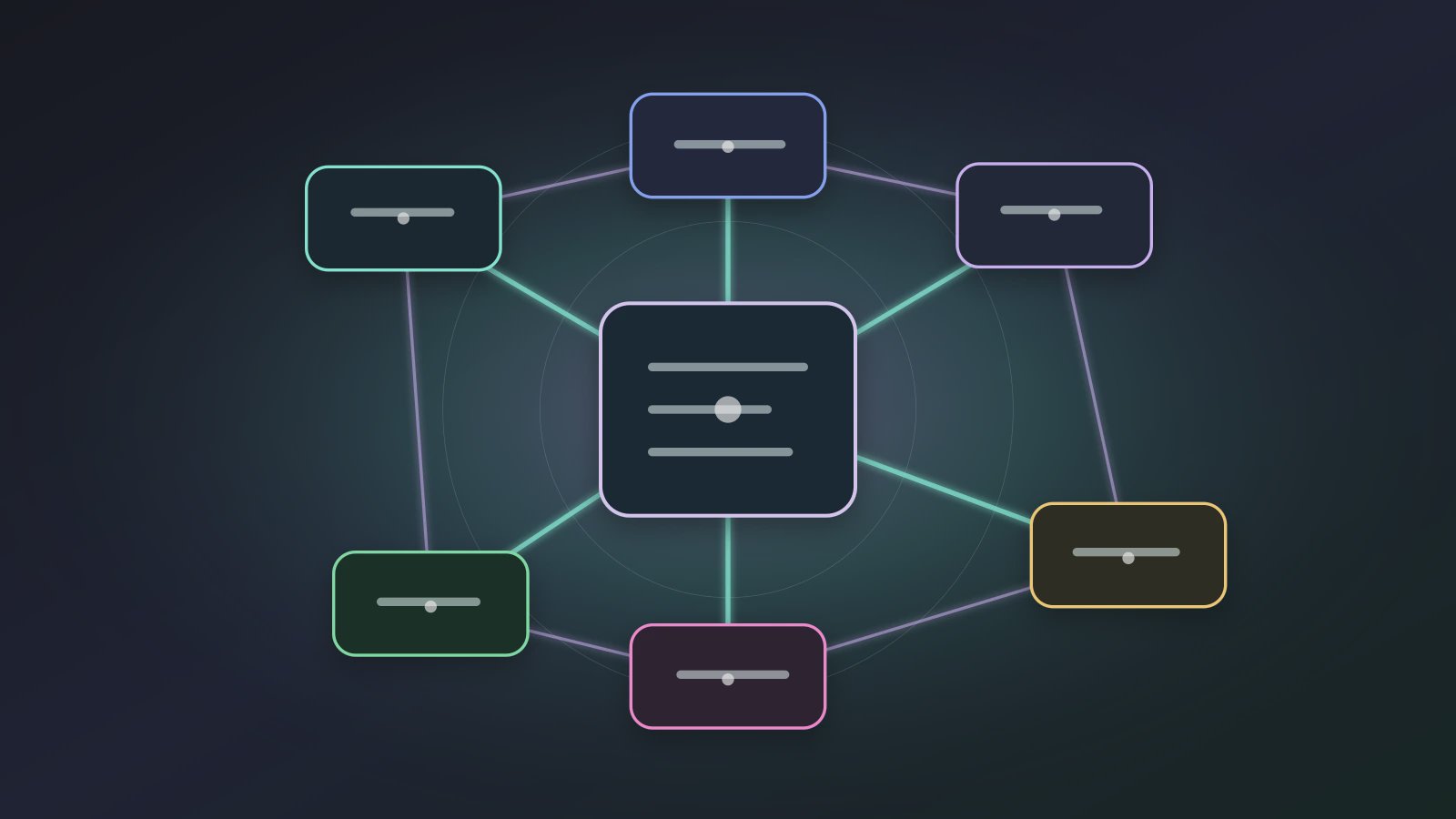
A Workflow Registry is the directory a team uses to govern AI Skills and Agent workflow capabilities: owner, trigger, input, output, version, permission, examples, and deprecation status. Many teams begin AI automation with a shortage of capabilities, then quickly move into the opposite pain point: repetitive tools, manual scripts, error-prone prompts, MCP tools, and internal templates competing for attention. The Agent is left guessing inside a messy toolbox. Axon should prevent AI Skills from becoming another form of plugin sprawl.
Anthropic's Agent Skills article shows how procedural knowledge can live in directories, scripts, and resources. ComfyUI's workflow and nodes documentation shows another lesson: once a node ecosystem expands, discovery, connection, and dependency management become system concerns. For Axon, a Workflow Registry is not a decorative catalog. It is the supply chain for AI employees.
More Skills without a Registry make Agents less stable. More Skills with a Registry make workflows easier to reuse.
From tool list to capability supply chain
A tool list answers "what exists." A Workflow Registry should answer "what can be trusted." A production-ready Skill needs more than a name:
- owner: who maintains it and answers questions.
- trigger: when it should be used, and when it should not.
- input/output: what material it needs and what artifact it produces.
- permission: whether it involves Auto, Confirm, or Auth.
- examples: at least one normal case and one boundary case.
- version: current version, change notes, and compatibility.
- status: draft, ready, deprecated, or blocked.
This extends Axon's earlier point about Skill catalogs and tool sprawl. Many capabilities are not the problem. Ungoverned capabilities are the problem.
A Registry Card
A team can describe one Skill with a compact card:
skillRegistryCard:
  skillName: "monthly close variance brief"
  owner: "finance operations"
  status: "ready"
  trigger: "monthly close package with ledger export and variance notes"
  produces: ["variance-summary.md", "review-questions.xlsx"]
  permissionLevel: "confirm for external sharing"
  examples:
    - "standard close package"
    - "missing ledger column"
  deprecates: []
The goal is not documentation for its own sake. The goal is to stop the Agent from guessing when to use a Skill, what it should produce, where the risk boundary is, and who owns failures.
Minimum rollout path
If the team already has several Skills, build the first Registry in three steps:
- Start with one business domain such as monthly close, contract review, or product content.
- Add owner, trigger, input/output, permission, and status for every Skill in that domain.
- Mark unstable or deprecated Skills so Agents do not keep choosing old capabilities by accident.
Four risks in the Skill supply chain
As Skills grow, the main risk is not a single failed Skill. The larger risk is supply-chain disorder:
| Risk | Symptom | Governance response |
|---|---|---|
| Trigger overlap | Two Skills claim the same task | Define trigger examples and counterexamples |
| Output drift | Downstream Agents cannot read the artifact | Fix output schemas and examples |
| Permission ambiguity | Send, delete, publish, or overwrite boundaries are unclear | Assign Trust Mode level |
| Version break | Old Agents keep calling old Skills | Track changes and deprecation path |
If the team ignores these risks, it returns to the old problem: many tools, unstable workflows. Axon's advantage is that System Skills, User Skills, and Agents can live inside one workflow governance model instead of growing as isolated capabilities.
What ComfyUI reminds office automation teams
ComfyUI makes it easy to see that as nodes multiply, selection matters. Its workflow documentation describes processes as connected nodes; its nodes documentation describes nodes as task units. In office automation, the lesson is not the visual canvas. The lesson is registration and dependency management. A node with unclear input, unknown version, or missing dependency should not enter a stable workflow.
Axon does not need every office capability to be shown as a visual node. It needs every Skill to be discoverable, judgeable, and updateable inside a Registry. This connects directly to Agent Skills workflow portability and Skill output schemas.
Governance Questions
Q1: Is a Workflow Registry only for engineering teams?
No. Business owners need to know what is available, who owns it, and whether the output can be accepted. Agents also need Registry information to choose the right Skill.
Q2: Does a small team need this much governance?
If a team has more than a few reusable Skills, it needs minimum governance. Start with owner, trigger, input/output, permission, and status.
Q3: Why does deprecation matter?
Old Skills may still be called by existing Agents. Without a deprecation path, teams waste time debugging conflicts between old and new rules.
Govern one Skill family first
Start the Axon governance work with one Skill family, not the whole capability library. Choose one high-frequency domain such as monthly close, research reports, contract review, or product content. Build a small Workflow Registry around the related Skills, use Skill change control to explore version governance, and expand to more Agent workflows after the first family is stable.