Agent Skills Make Workflow Knowledge Portable: Why Axon Turns Processes Into Skills
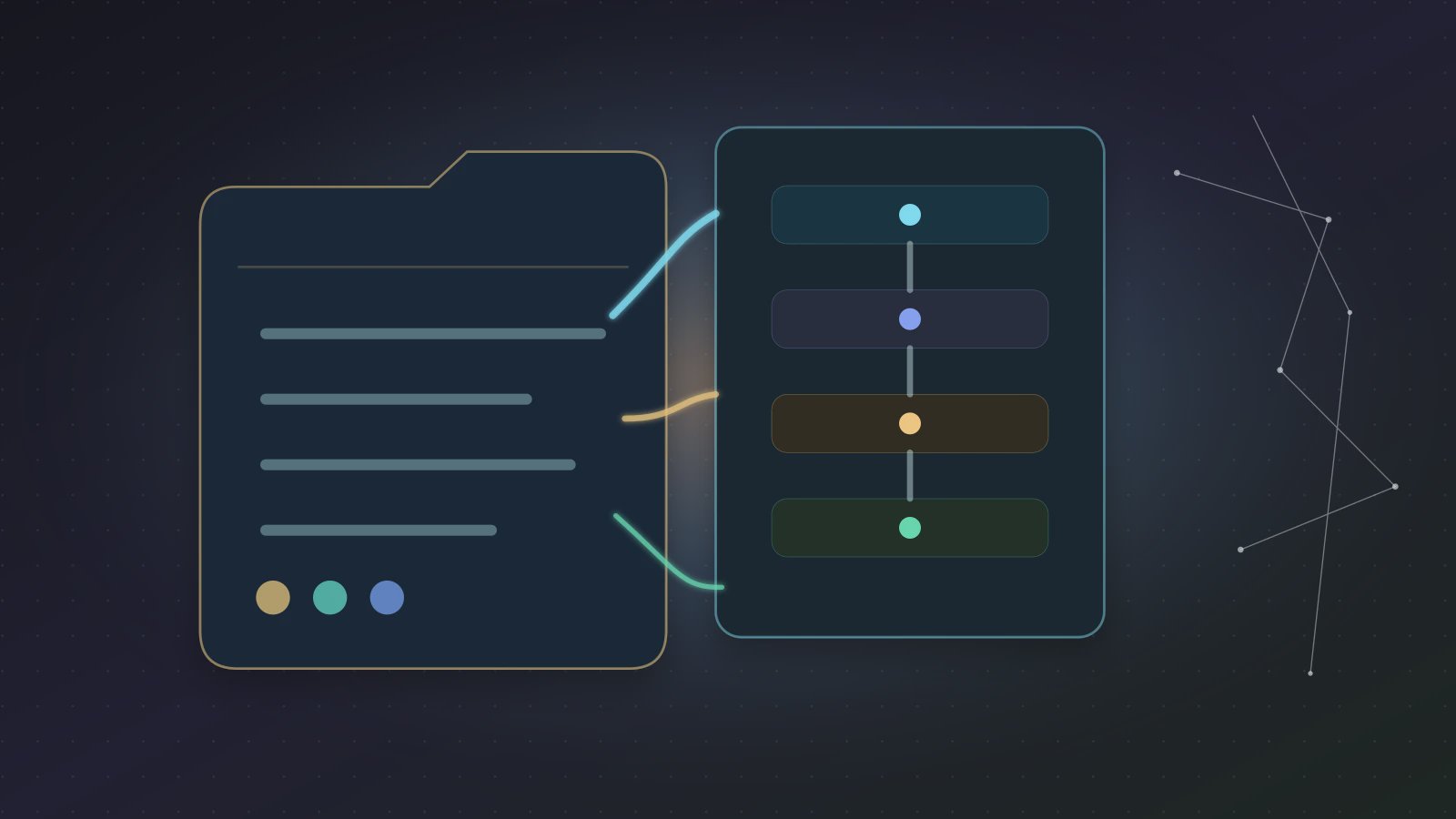
An Agent Skills workflow turns repetitive, manual, error-prone process knowledge into a package that an Agent can discover, read, execute, and reuse. Many teams do not lack access to a powerful model. They lose hours because the real workflow is scattered across one person's memory, old documents, spreadsheet templates, and one-off prompts. One employee knows how to do the task; another has to ask again. One Agent run succeeds once; the next context requires the entire process to be explained again. Axon's User Skills exist to make that knowledge portable.
Anthropic's Agent Skills article frames a Skill as a directory with a SKILL.md, instructions, scripts, and resources that an agent can load dynamically. It also emphasizes progressive disclosure: the agent should load the right level of detail only when needed. Axon shares the same operating belief for office work. An AI employee should not depend on a giant prompt to remember a process. It should use Skills for stable capability, then let Agents chain those Skills into intelligent workflows.
The portable asset is not a prompt. It is a packet of procedural knowledge: when to trigger, what to read, which scripts to run, what to produce, and how to accept the result.
Why prompts are weak process assets
Prompts are good at expressing intent. They are weak as long-term operational assets. A prompt usually has no versioned examples, no dependency map, no deterministic script, no artifact template, and no acceptance standard. The result is familiar: the team repeats the same instructions every week about which fields to read, how the report should be structured, which tone to use, and what the Agent must not send automatically.
An Agent Skills workflow makes that hidden knowledge explicit. A useful Skill should answer practical questions:
- When should this capability be used?
- What conditions must the input satisfy?
- Which steps should be deterministic code?
- Which judgments belong to the LLM?
- What artifact should be created, named, saved, and accepted?
- What should happen on failure instead of guessing?
Axon's article on Skill catalogs and tool sprawl points to the same governance issue. As capabilities grow, Agents need readable, selectable, and auditable skill catalogs rather than a pile of vague tools.
A Skill is an onboarding guide with runtime hooks
For office workflows, a Skill should not be treated as a thin plugin. It should look more like an onboarding guide for a new colleague, except that this guide also contains machine-readable rules and executable assets.
| Package element | Human value | Agent value |
|---|---|---|
| Trigger guidance | Know when to use it | Reduce accidental activation |
| Example inputs | Copy a real business case | Stabilize parameter selection |
| Scripts and templates | Avoid manual processing | Move deterministic work into code |
| Acceptance rules | Make delivery reviewable | Avoid "looks right" outputs |
| Risk boundaries | Clarify responsibility | Feed Trust Mode decisions |
That is the role of Axon User Skills. A team can package its weekly report, invoice check, contract review, research summary, or listing-optimization routine into a business capability, then let an Agent call it in a fixed sequence.
What a portable Skill packet can contain
The following structure is not a required website schema. It is a practical way to think about a portable Agent Skills workflow inside Axon:
invoice-review-skill/
  SKILL.md
  examples/
    sample-input.json
    expected-output.md
  scripts/
    normalize-invoices.py
  templates/
    review-report.md
  acceptance/
    checklist.md
This layout separates the work into layers. SKILL.md explains activation and boundaries. examples demonstrate realistic use. scripts handle deterministic processing. templates define the artifact. acceptance describes the review standard. The LLM does not need to load every file into context. It can start from metadata, then read the relevant material when the task requires it. Anthropic calls this progressive disclosure; Axon applies the same idea through User Skills, System Skills, and Agent steps.
A pre-packaging checklist
Before turning a process into a Skill, the team can ask:
- Does this workflow recur every week or every month?
- Does it use stable input fields or document types?
- Does it produce a clear file, record, or payload?
- Are there steps that deterministic code should handle?
- Does any action require human confirmation before external impact?
If most answers are yes, the process should stop living inside a prompt. It should become a Skill package and then enter Agent orchestration. For the output side of this decision, read Skill output schemas as Agent contracts.
Axon's distinction: Skills are not isolated add-ons
Many platforms describe skills as a way to give an Agent more capabilities. Axon treats Skills as part of an operating loop. System Skills provide base capabilities. User Skills package the team's business knowledge. Agent steps connect multiple Skills into a scheduled workflow. Trust Mode governs external impact. The result is not only portable knowledge; it is a workflow that can move toward production.
An invoice-review Skill can run by itself, but it can also become part of a monthly-close Agent, preceded by file ingestion and followed by Excel output plus a Markdown management report. A contract-review Skill can produce a risk list alone, but it can also feed an evidence-package workflow and a counsel-collaboration brief. The value of a Skill is that it can be reused by more than one Agent instead of becoming another single-use tool.
If your team still treats prompt engineering as process engineering, start with migrating from prompts to Skills. If you need a concrete first Agent path, use the Build Agent Autorun tutorial.
Portability Questions
Q1: Is an Agent Skills workflow only for developers?
No. Developers may help with scripts and structure, but business users define the workflow, examples, acceptance criteria, and risk boundaries. Axon's direction is to let natural language help users build Skills first, then improve the executable parts over time.
Q2: Why not put all knowledge into one long SKILL.md?
A long file increases context cost and makes irrelevant instructions more likely to be loaded. A better structure keeps trigger guidance at the entry point while separating forms, templates, scripts, and acceptance rules into files the Agent loads when needed.
Q3: Does portability mean any platform can run the Skill unchanged?
Not necessarily. Portability first means the knowledge structure is clear, dependencies are visible, and output can be reviewed. Different platforms have different runtimes and permission models, but a well-structured Skill packet lowers migration cost.
Start with one process packet
An Agent Skills workflow turns "someone knows how to do this" into "the system knows how to execute this." The next move is not to package every department at once. Choose one frequent, low-risk task with a clear artifact. Start using Axon to make it a User Skill, connect it to Agent steps, and learn more from the Skill output and tutorial material before expanding toward scheduled execution, Trust Mode, and cross-team reuse.